Materials
Watercolor Materials
What the materials actually do: cotton and wood-pulp paper, brush hair and shape, and how pigments differ in transparency, granulation and lightfastness.
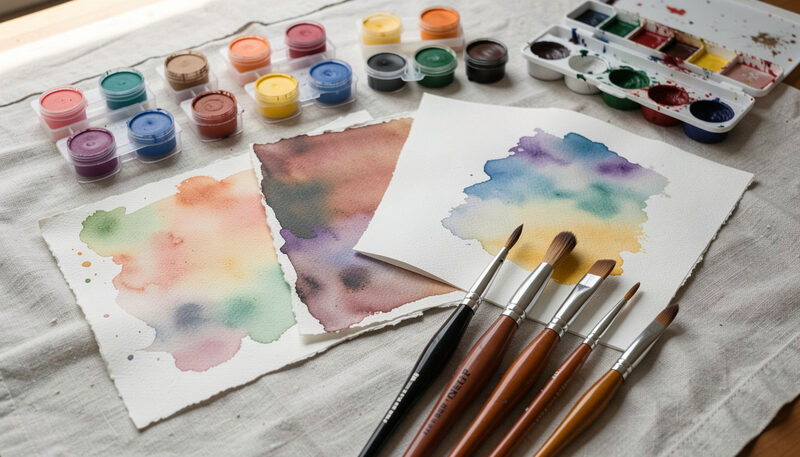
Watercolor materials are simple in number and decisive in effect. There are only three: paper, brushes and paint. Each one changes what the paint can do on the sheet, and a painter who understands them stops wasting money on the wrong things. This section explains what each material actually contributes, so that a beginner can start with a small, honest kit and an experienced painter can judge a purchase before making it.
What the materials actually change
Paper decides how long the water stays workable and how the paint settles. Brushes decide how much water and pigment can be carried and how the mark is shaped. Pigments decide the color, the transparency and how the paint behaves when it dries. A beautiful pigment on poor paper will disappoint; a modest pigment on good cotton paper can sing. Of the three, paper has the largest effect on the final result, which is why the guides here start there.
Paper is the foundation
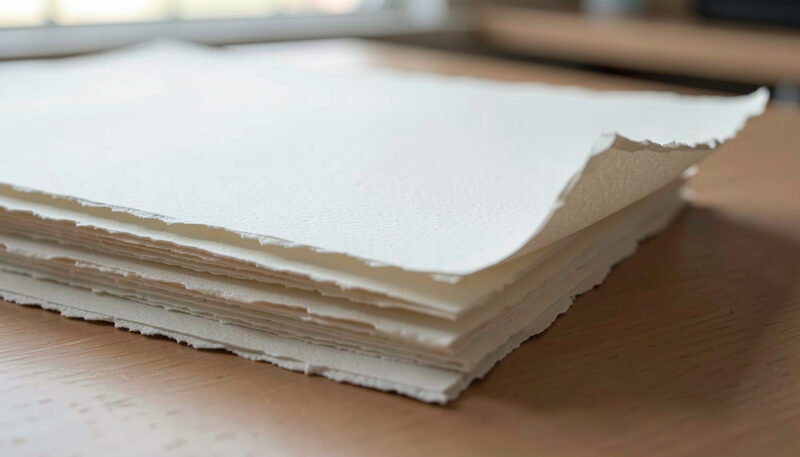
Watercolor paper is made from cotton fiber, from wood pulp, or from a blend. Cotton is absorbent, strong and forgiving, and it keeps the paint luminous. Wood pulp is cheaper and thinner, it buckles more easily and it yellows over time. Weight, usually given in pounds or grams per square meter, sets how much water the sheet can take. Surface, whether cold press, hot press or rough, sets the texture of every mark. The paper guide explains how to choose among them for a given subject and budget.
Brushes: hair and shape
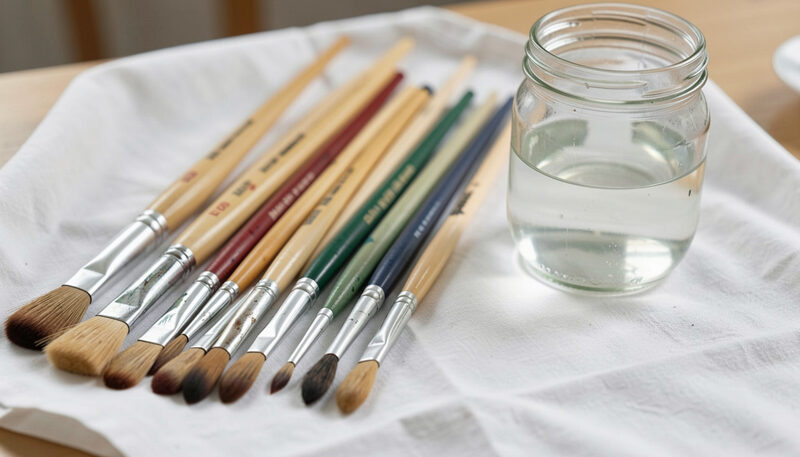
A brush is judged by the hair, the shape and the point. Natural sable holds water and springs back, squirrel is soft and holds a great deal of water but has little snap, and modern synthetics imitate both and are often the best value for a beginner. The shape decides the mark: a round for lines and washes, a flat for blocks and edges, a mop for large wet areas and a rigger for fine lines. A painter needs few brushes, but they should be good ones. The brush guide covers hair, shape, size and care.
Pigments and their properties
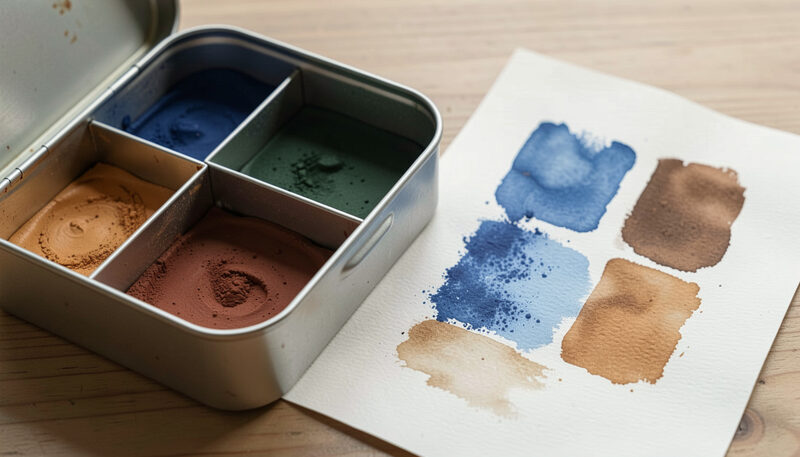
Watercolor paint is pigment bound with gum arabic and a little glycerine or honey to keep it workable. The pigment itself decides whether the paint is transparent or opaque, whether it stains the paper or lifts cleanly, whether it granulates, and how well it resists light. Reading these properties, rather than the romantic names on the tube, is the key to a palette that behaves predictably. The pigment guide explains each property and how to build a small, lightfast palette.
A small honest kit
A serious beginner kit is small. One block or pad of cotton paper in a usable size, two round brushes, one large and one medium, and a set of eight to twelve pigments covering a warm and a cool of each primary, plus two earths, will carry a painter for a long time. Buying a large set of cheap paint before learning to mix is the usual mistake. Start with less, learn what each color does, and add only when a real need appears.
Care and longevity
Brushes last for years if they are rinsed and reshaped after every session, dried flat or standing on the handle, and never left standing in water. Pans and tubes keep for decades. Finished paintings are best stored flat, away from light, between sheets of acid-free paper, and framed behind glass with a mat so the paper never touches the glazing. Looking after the materials is part of learning to paint well, because it keeps the tools predictable.
What to buy first, and what to postpone
If the budget is limited, spend it in this order: paper first, then one or two good brushes, then a small set of single-pigment paints. A good cotton paper will improve every painting more than any other purchase, and a single good round brush will do the work of several cheap ones. Postpone the large sets, the many brushes, the masking fluids and the special papers until a real need appears. A painter who masters a small kit learns to mix, to load a brush and to judge the water, and those skills transfer to any material bought later. The rest of this section explains what each purchase actually changes.
Where to go next
With paper, brushes and pigments understood, the next step is technique. The technique section covers washes, glazing and dry brush, and the subject guides put the materials to work on skies, water and trees. A painter who reads all three sections, and then paints a small study every week, will learn faster than one who keeps buying supplies.
Materials
Choosing Watercolor Paper
Choose watercolor paper by fiber, weight and surface: cotton against wood pulp, 140 lb against 300 lb, cold press, hot press and rough, sizing and stretching.
Fiber, weight and surface, and why the sheet matters most.
Materials
Choosing Watercolor Brushes
Pick watercolor brushes by hair and shape: sable, squirrel and synthetic, round, flat, mop and rigger, plus size, snap, point and how to care for them.
Hair, shape and size, and the marks each one makes.
Materials
Understanding Watercolor Pigments
Read watercolor pigments by property: transparent against opaque, staining against lifting, granulating earths, lightfastness and a limited palette.
Transparency, granulation, lightfastness and a limited palette.